
RSS

Category Archives: Cities-Urban

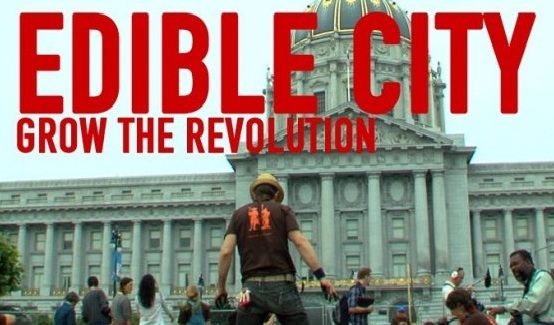
Edible City: Grow The Revolution (2012)

Directed by: Andrew Hasse
Documentary Feature (71 minutes) 2012edible-city-1

Edible City is a fun, fast-paced journey through the local Good Food Movement that’s taking root in the San Francisco Bay Area, across the nation and around the world. Edible City digs into the unique perspectives and transformative work of organizers and local working folks– from edible education to grassroots activism to building local economies– finding hopeful solutions to monumental problems. Inspirational, down-to-earth and a little bit quirky, Edible City captures the spirit of a movement that’s making real change and doing something truly revolutionary: growing the model for a healthy, sustainable local food system.

http://www.ediblecitythemovie.com/


Tags: , ,

Your Day Is My Night (2012)

Your-Day-is-My-Night-Seut-Lee-Ellen-HoDirected by Lynne Sachs, Co-Director Sean Haley

Part Documentary, part narrative, completely enlightening look at what it means to be a Chinatown NY resident for decades and still sharing a bed by shifts, called “shift-bedding.” This film had it’s world premier in February at The Museum of Modern Art’s Doc Fortnight.
“Since the early days of New York’s Lower East Side tenement houses, working class people have shared beds, making such spaces a fundamental part of immigrant life. Initially documented in Jacob Riisʼ now controversial late 19th Century photography, a “shift-bed” is an actual bed that is shared by people who are neither in the same family nor in a relationship. Simply put, it’s an economic necessity brought on by the challenges of urban existence. Such a bed can become a remarkable catalyst for storytelling as absolute strangers become de facto confidants.

In this provocative, hybrid documentary, the audience joins a present-day household of immigrants living together in a shift-bed apartment in the heart of Chinatown. Seven characters (ages 58-78) play themselves through autobiographical monologues, verité conversations, and theatrical movement pieces. Retired seamstresses Ellen Ho and Sheut Hing Lee recount growing up in China during the turmoil of the 1950s when their families faced violence and separation under Chairman Maoʼs revolutionary, yet authoritarian regime. Yun Xiu Huang, a nightclub owner from Fujian Province, reveals his journey to the United States through the complicated economy of the “snakehead” system, facing an uphill battle as he starts over in a new city.

With each “performance” of their present, the characters illuminate both the joys and tragedies of their past. As the bed transforms into a stage, the film reveals the collective history of Chinese immigrants in the United States, a story not often documented. Further, the intimate cinematography and immersive sound design carry us into the dreams and memories of the performers, bringing the audience into a community often considered closed off to non-Chinese speakers. Through it all, “Your Day is My Night” addresses issues of privacy, intimacy, and urban life in relationship to this familiar item of household furniture.”

http://www.lynnesachs.com
 

Farewell to Factory Towns?

Director Maynard Seider | USA, 61 min.

When a New England town creates an art museum in an old building, it fails to produce the jobs promised, and the city’s downtown remains semi-deserted. Should national policy change to bring a new “New Deal” to such towns?


The Road to Rock Bottom: PBS Great Depression Series (1993)

PBS Great Depression Series, #2

Producer: WGBH, Boston

Narrator: Joe Morton

53 minutes

This film, the second in the PBS Great Depression Series, examines the plight of farmers, sharecroppers, and agricultural workers before and particularly during the onset of The Great Depression. Devoting ample time to the hardships of agricultural labor, it focuses on the devastating effects that environmental factors such as drought wrought on farmers, migrant laborers, and sharecroppers alike. Sliding farm prices due to the glut of products on the market spurred a cycle of diminishing returns for most farmers, exacerbating their indebtedness and causing foreclosures, homelessness, privation, and starvation. “The Road to Rock Bottom” also devotes considerable time to the allure that Charles “Pretty Boy” Floyd had among many impoverished Americans in the early Depression era. A bank robber, Floyd enjoyed popular support–and occasionally some protection–among struggling farming communities, for Floyd’s targeting banks tapped into their resentment at institutions that, on the one hand many blamed for causing the Great Depression and, on the other, were increasingly foreclosing on their farms and homes. The inability and unwillingness of the federal government to devote far more resources to battling the onslaught of poverty and desperation receives ample attention in the documentary as well. Many politicians, including President Herbert Hoover, believed that increasing the federal government’s role in the daily lives of its citizens would foster dependency that ran counter to the themes of individualism permeating both America’s political parties at that time, and long-standing American political traditions. Culminating the film is the Bonus Army’s march to and occupation of parts of Washington D.C. Its unsuccessful efforts to pressure Congress to pay the service bonus to military veterans earlier than promised resulted in violent clashes between the Army (led by Chief of Staff Douglas MacArthur) and the Bonus marchers, sealing the fate of the Hoover presidency well before his overwhelming electoral defeat to Franklin D. Roosevelt in the 1932 presidential elections.


A Job at Ford’s: PBS Great Depression Series (1993)

PBS Great Depression Series, #1

Producer: WGBH, Boston

Narrator: Joe Morton

51 minutes

The first film in the WGBH Great Depression Series, this documentary uses the rise of the Ford system of manufacturing and workplace control as a prism into the onset of the socioeconomic cataclysm by the end of the 1920s known as the Great Depression. Stocked with oral histories with workers, managers, and working-class families, as well as archival film footage, it analyzes the ways in which the automobile, as a product of labor and a catalyst for deep transformations in American society, dominated American life and dictated its economic fortunes. Cars offered far greater access to travel and cultural experiences, especially for women and rural residents, than ever before. Auto work also attracted migrants from across the country, as well as from Mexico, to manufacturing centers in Detroit and the industrial North. Crucially, “A Job at Ford’s” illustrates the repressive labor-relations system that governed not only the workplace environment of auto workers, but also the daily lives of their families in order to ensure compliance with Henry Ford’s desires for social control. Additionally, the film devotes ample time to Ford’s anti-Semitic, racist beliefs, to the worsening conditions of the Depressions, the struggles of everyday people to survive largely without the direct help of the federal government, and the community-based efforts of political radicals and neighborhood groups to respond to the crises. Culminating with the Ford Hunger March in which Ford security guards killed four marchers and wounded over sixty others, the film conveys violence as not only a real threat to organizing at this time, but also a thread through, and force mitigating, working-class daily life in the early twentieth century.


Whores’ Glory (2011)

Director: Michael GlawoggerWhoresGlory
110m
Germany/Austria (subtitled in English)

Stories of prostitution around the world. The documentary revolves around the lives and individual hopes, needs and experiences of the women.


Brooklyn Castle (2012)

US
101m
documentary
http://www.brooklyncastle.com/

Tells the stories of five members of the chess team at a below-the-poverty-line inner city junior high school that has won more national championships than any other in the country. The film follows the challenges these kids face in their personal lives as well as on the chessboard, and is as much about the sting of their losses as it is about the anticipation of their victories. Ironically, the biggest obstacle thrust upon them arises not from other competitors but from recessionary budget cuts to all the extracurricular activities at their school. BROOKLYN CASTLE shows how these kids’ dedication to chess magnifies their belief in what is possible for their lives. After all, if they can master the world’s most difficult game, what can’t they do?


The Hunger Games (2012)

142m; U.S.

Director: Gary Ross

Cast: Jennifer Lawrence, Josh Hutcherson and Liam Hemsworth, Woody Harrelson, Donald Sutherland

Synopsis: In a dystopic future North America called Panem, the wealthy elite who live in the central city (known as the Capitol) exploit the impoverished workers of the rest of the country who are divided into twelve districts.  The Capitol employs a range of social controls, including the Hunger Games, an annual event where two children from each district are thrown into an arena and fight until only one is left alive.

Into these games is thrust Katniss Everdeen, the daughter of a coal miner, who must use her wits and skills to survive while trying to maintain her humanity, even as her examples of resistance and solidarity begin to inspire some of the districts towards rebellion.

Trailer


Tags:

Neighboring Sounds (2012)

KLEBER MENDONÇA FILHO 
Brazil, 2012, 124 minutes, 35mm, Color, film’s website

Cast: Irandhir Santos (Clodoaldo), Gustavo Jahn (João), Meve Jinkings (Bia), W. J. Solha (Francisco), Irma Brown (Sofia), Lula Terra (Anco), Yuri Holanda (Dinho) and Clébia Souza (Luciene).

The setting is the city of Recife, Brazil, on a seaside street, much of it owned by Francisco (W.J. Solha), an old-school paterfamilias. Director Kleber Mendonca Filho divides the film into three chapters, effortlessly weaving together his characters while slipping in small details that cumulatively speak of class, race, and the nation’s uneasy past. Beatriz (Maeve Jinkings) is almost always seen in her apartment, an airy setup with all the appurtenances of the middle class. She has certain needs, of course. Just arrived on the street is a private security team, which convinces residents that its services are needed. Viewers know the protection required is from inner demons, not outer ones. That Filho can juggle so many important issues without being heavy-handed or dropping a single one speaks volumes about his strengths. Neighboring Sounds captures the very fabric of Brazilian society, whose seemingly porous hierarchies prove to be prohibitively rigid. —Variety

Trailer

 
Leave a comment

Posted by on August 27, 2012 in Cities-Urban, Class, Drama


The Citadel: Birth of the LeVeque Tower (2011)

Director: Seth Moherman

Synopsis: Documentary about the building of the LeVeque Tower in Columbus, OH.