U.K.
Director: Ken Loach
Synopsis: Liverpool dockworkers’ strike.
U.K.
Director: Ken Loach
Synopsis: Liverpool dockworkers’ strike.
16m; U.S.
Synopsis: Describes the circumstances which caused over 400 workers at the O’Sullivan Rubber Company in Winchester, VA, to strike on 5/13/56 to preserve their union.
20m; U.S.
Synopsis: Recounts an infamous chapter in Colorado history when militia and striking coal miners clashed on the plains of south Colorado at Ludlow.
A stirring portrait of the lives and legacy of the Reuther Brothers -Walter, Roy and Victor, pioneering labor leaders under the banner of the United Auto Workers Union. Directed by Victor’s grandson, Sasha Reuther and narrated by Martin Sheen, the film follows the brothers as they rise from militant shop-floor organizers to visionary statesmen in collective bargaining, civil rights and international labor solidarity. Brothers on the Line weaves the tale of one family’s quest to compel American democracy to live up to its promises of equality for all.
Director: Sasha Reuther, sasha@brothersontheline.com
http://www.brothersontheline.com
Porter Street Pictures
95m; U.S.
Director: James Goldstone
Cast: Sidney Poitier, Will Geer, Bradford Dillman
Synopsis (IMDB): A mysterious man John Kane (Sidney Poitier) who, when he returns to his hometown in Alabama for his sister’s funeral, is thought to be an outside labor agitator – until it’s revealed that he’s really a heavenly messenger. The plot revolves around a strike at the town’s big factory.
56m; U.S.
Director: David Appleby, Allison Graham, Steven Ross
Synopsis: Documents the 1968 Memphis sanitation workers’ strike and the historical forces which came together with the death of Dr. Martin Luther King. NOTE: see I Am A Man for a 10m version.
Opening Sequence
132m; Italy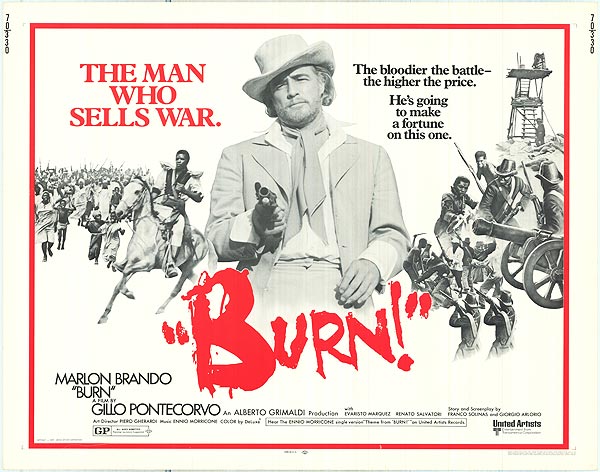
Director: Gillo Pontecorvo
Cast: Marlon Brando, Evaristo Márquez and Norman Hill
Synopsis: Pontecorvo’s follow-up to The Battle of Algiers tells a story of imperial intrigue on a fictional Portuguese “sugar and slaves” colony in the Caribbean in the 1840s. Marlon Brando plays a British agent who helps convince Jose Dolores, one of the island’s many African slaves, to lead a revolt – which temporarily aligns with the local elite and wins independence. However, the African slaves’ economic and social position remains virtually the same under the new regime. Years later, Brando’s character must return as the Africans are now revolting against their new masters. Pontecorvo uses the story as a metaphor less for any one particular historical incident, but as a left-wing commentary on the full history of slavery, empire, neo-colonialism and resistance for the past two centuries.
Opening Title
Full Film (in 12 Parts)
110m; UK
Director: Stephen Daldry
Cast: Jamie Bell, Julie Walters and Jean Heywood
Synopsis (IMDB): County Durham, during the endless, violent 1984 strike against the Thatcher closure of British coal mines. Widower Jackie Elliot and his firstborn, fellow miner Tony, take a dim view of 11 year-old second son Billy’s poor record in boxing class, which worsens when they discover he sneakily transferred to the neighboring, otherwise girls-only-attended ballet class. Only one schoolmate, closet-gay Michael Caffrey, encourages Billy’s desire, aroused by the teacher, who judged him talented enough for private lesson, to train and try out for the world-renowned Royal Ballet audition. Only the prospect of a fancy career unimagined in the pauper quarter may twist pa and big brother’s opposition to indispensable support.
Trailer
9m
Director: Victor Dobchuk
Synopsis (CLiFF): A look at the 1919 Winnipeg General Strike, 75 years later.
86m; U.S.
The Attorney General of the United States called A. Philip Randolph “the most dangerous Negro in America.” He forced President Roosevelt to integrate the armed forces, won the first-ever contract for a Black union when he organized the Pullman porters and was the moving force behind the historic 1963 March on Washington.
 THE LABOR FILM DATABASE