RSS

Category Archives: Working Class

Life on the Line

2015 ‧ Drama/Action ‧ 1h 37m

After a family tragedy, Beau Ginner rises to be foreman in a Texas lineman team, upgrading overhead power cables and preventing disasters. However, there is friction when his college-bound niece Bailey’s on-off boyfriend Duncan joins the crew, while another new recruit is hiding PTSD symptoms.

Release date: 2016 (USA)
Director: David Hackl
Music composed by: Jeff Toyne
Executive producers: Chad Dubea, Rosa Morris Peart, Shawn Williamson, Bryant Pike, Jamie Goehring
Producers: Phillip Glasser, Marvin Peart

https://www.nytimes.com/2016/11/18/movies/life-on-the-line-review-john-travolta-kate-bosworth.html

https://www.rogerebert.com/reviews/life-on-the-line-2016


Mine 9

2019 ‧ Drama ‧ 1h 23m

Miners struggle to survive after an explosion leaves them trapped two miles underground.

Release date: April 12, 2019 (USA)
Director: Eddie Mensore
Music composed by: Mauricio Yazigi
Producer: Eddie Mensore
Screenplay: Eddie Mensore

‘Mine 9’ Review: A Tense Disaster Drama, Undermined by Clichés


Solidarity

Solidarity-FILM-2019

Film about the construction industry blacklist in the UK.

Directed by Lucy Parker
2019; 75 mins

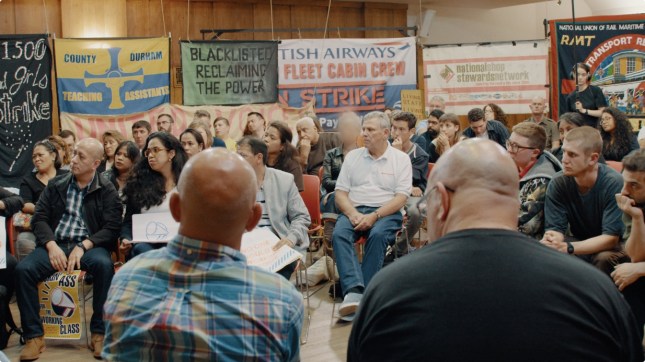
SOLIDARITY is about the secretive methods used against UK activists and trade unionists. Blacklisted construction workers and activists spied on by the police share their ongoing struggles.

Blacklisting in the UK construction industry impacted thousands of workers who were labelled ‘troublemakers’ for speaking out and secretively denied employment. Activists uncovered alarming links between workplace blacklisting and undercover policing.  SOLIDARITY attentively follows meetings between activists and law students, brought together for the film, revealing the determination of a community working together to find a route to justice.

The first feature length film from artist filmmaker Lucy Parker, Solidarity has been made alongside and features members of Blacklist Support Group, core participants in Undercover Policing Inquiry, and members of other campaigning groups including  Voice of Domestic Workers, Cleaners and Allied Independent Workers Union, Independent Workers of Great Britain, GMB, RMT, Unite British Airways Mixed Fleet, County Durham Teaching Assistants, BECTU Picturehouse and many individual trade unionists.

Funded by Arts Council England, Barry Amiel & Norman Melburn Trust, Lipman Miliband Trust, Kingston University and donations from trade union branches and individuals.

Info and a trailer here: https://vimeo.com/331182945

WEBSITE
CONTACT INFO
City Projects
46 Brookbys’s Walk, London, E9 6DA
0781 306 2595

www.cityprojects.org

Email: info@cityprojects.org
Twitter: @solidarity_film


Sorry We Missed You

2019 ‧ Drama ‧ 1h 40m

Ricky and his family have been fighting an uphill struggle against debt since the 2008 financial crash. An opportunity to wrestle back some independence appears with a shiny new van and the chance to run a franchise as a self-employed delivery driver. It’s hard work, and his wife’s job as a carer is no easier. The family unit is strong but when both are pulled in different directions everything comes to breaking point.

Initial release: May 16, 2019 (France)
Director: Ken Loach
Producer: Rebecca O’Brien
Screenplay: Paul Laverty
Nominations: Palme d’Or, Cannes Best Actress Award, MORE
Production companies: Wild Bunch, Why Not Productions, Sixteen Films

Sorry We Missed You review – Ken Loach’s superb swipe at zero-hours Britain


PETERLOO

Internationally acclaimed and Oscar-nominated filmmaker Mike Leigh portrays one of the bloodiest episodes in British history, the infamous Peterloo Massacre of 1819, where government-backed cavalry charged into a peaceful crowd of 80,000 that gathered in Manchester, England to demand democratic reform.

The film Peterloo will mark the 200th anniversary of the notorious Peterloo Massacre.

On 16 August 1819, a crowd of some 60,000 people from Manchester and surrounding towns gathered in St Peter’s Fields to demand Parliamentary reform and an extension of voting rights. The meeting had been peaceful but in the attempt to arrest a leader of the meeting, the armed government militias panicked and charged upon the crowd. The toll of casualties has always been disputed, but as many as 15 people were killed and up to 700 wounded. The immediate effect of the massacre was a crackdown on reform, as the authorities feared the country was heading towards armed rebellion. However, the outcry led to the founding of the Manchester Guardian and played a significant role in the passage through Parliament of the Great Reform Act 13 years later.
The end of the Napoleonic Wars in 1815 had resulted in periods of famine and chronic unemployment, exacerbated by the introduction of the first of the Corn Laws. By the beginning of 1819, the pressure generated by poor economic conditions, coupled with the relative lack of suffrage in Northern England, had enhanced the appeal of political radicalism. In response, the Manchester Patriotic Union, a group agitating for parliamentary reform, organised a demonstration to be addressed by the well-known radical orator Henry Hunt.


They Don’t Wear Black Tie (1981) Eles Não Usam Black-Tie

2h | Drama | 18 April 1982 (USA)

Brazilian drama film directed by Leon Hirszman, based on Gianfrancesco Guarnieri’s play of the same name. Union leader’s son doesn’t want to engage in a strike, because his wife is pregnant, thus disregarding his father’s tradition of political activism. The film revolves around a working-class family in São Paulo in 1980. Otávio, a syndicalist leader, and Romana are the parents of Tião, whose girlfriend, Maria, becomes pregnant. Fearing to be fired and thus unable to support his now fiancée, Tião does not participate on a strike, which starts a series of family conflicts.

Full film here


163 DAYS (163 DÍAS. LA HUELGA DE BANDAS)

Larraitz Zuazo
Spain | 2017 | Documentary | 68 minutes
In 1966, 800 workers from the Biscayan company ‘Laminación de Bandas en Frio’ carried out the longest strike of Franco’s dictatorship. In a tumultuous historic moment within the framework of growing organisation of the working class and anti­Franco sentiments, hundreds of residents of Etxebarri, Basauri and Otxarkoaga launched a political struggle that would end up being an example for the entire labor movement that would follow. Through the main characters and their stories, anecdotes and experiences, we create an image of the 163 days of strike that made the dictatorship’s foundations shake.


A Feeling Greater Than Love

Mary Jirmanus Saba
Lebanon | 2017 | Documentary | 93 minutes

Dreams of popular revolution, erased by civil war. A young girl martyred at a factory strike in Beirut in 1972 – her identity shrouded in mystery.  A meditation on revolution, cinema and their possibilities, past and present.

In her directorial debut, Mary Jirmanus Saba deals with a forgotten revolution, saving from oblivion bloodily suppressed strikes at Lebanese tobacco and chocolate factories. These events from the 1970s, which held the promise of a popular revolution and, with it, of women’s emancipation were erased from collective memory by the country’s civil wars. Rich in archival footage from Lebanon’s militant cinema tradition, the film reconstructs the spirit of that revolt, asking of the past how we might transform the present.


At War (En guerre)

| Drama | 16 May 2018 (France)
Cinema Libre Studio; Richard Castro: rcastro@cinemalibrestudio.com

After promising 1100 employees that they would protect their jobs, the managers of a factory decide to suddenly close up shop. Laurent takes the lead in a fight against this decision.

Director:  Stéphane Brizé

Writers:  Ralph Blindauer (collaboration), Stéphane Brizé (screenplay) | 3 more credits »

Stars:  Vincent LindonMélanie RoverJacques Borderie 

The presentation of Stephane Brize’s At War received a 15 minute ovation at the end. The film details the way that French workers at a factory, who were promised work for five years and who gave back hours and wages after two years, find out that the German owned company, which is making a profit, is going back on its word. It is closing because it can reduce wages even further by moving to Romania. The film premiered the day after Oxfam announced that of the leading industrialized countries French businesses returned the greatest share of their profits, 68%, to shareholders who simply pocketed the money, a factor which is revealed in the film as also driving the plant closing. The film concentrates solidly on the attempts to resist the firing of the factory workers with little psychologizing of his characters in a way that keeps it focused on their economic plight. The only problem was the overemphasis on one worker, played by Vincent London, one of the only professional actors in the cast, but miscast in a film whose subject was the collective group of workers. This character though does come finally to expresses the near hopelessness of workers caught in the global corporate capitalist vice, and the ovation at the premiere seemed to be as much for French workers themselves as for the cast, crew, and film.


Good Luck

Ben Russell 
France, Germany / 2017/143 min

Ben Russell’s third feature is an apparent simplicity that is only matched by its power of evocation. Divided into two distinct parts (and an epilogue), this conceptual ethnographic film takes us to the heart of two sites of intense manual work poles apart from each other. The first is a Serbian underground copper mine. The second is an open-pit gold mine in Suriname. Sublimely shot in super 16mm, in black and white and color, Good Luck is openly a study of contrasts that encourages us to reflect on the differences – and the similarities – between the anxious atmosphere of the state mine and the sinking sun of the semi-legal career. Constantly emphasizing the individuality and mutual aid of the workers, Good Luck is also, and above all, a great gesture of humanist solidarity. (BD)

Ben Russell’s third feature is as powerful as it is apparently simple. Presented in two distinct parts plus an epilogue, this conceptual ethnographic film transports us to two intense and very different manual labor sites. The first is an underground copper mine in Serbia, the second year open-pit gold mine in Suriname. Beautifully shot in 16mm, in both color and black and white, Good Luck is a study in contrasts that encourages us to think about the differences and similarities between the tense atmosphere of the state-run mine and the brutal sun beating down on the semi- legal quarry. Always highlighting the workers’ individuality and solidarity, Good Luck is also a work of deep humanist solidarity.

Review (NYT): In ‘Good Luck,’ Miners in Serbia and Suriname Share a Cinematic Link